Leather Boot Production Cost and Lead Time Guide
Leather boot production costs vary by material, labor, and production complexity. Lead times depend on supply chain stability and order volume. Buyers must request detailed cost breakdowns and clear delivery schedules to compare quotes fairly and avoid unexpected delays in sourcing safety footwear.
- Raw material costs and labor rates drive the base price of leather boots.
- Supply chain delays affect lead time more than production speed.
- Clear RFQs reduce quote variance and improve scheduling accuracy.
- Compare quotes using standardized cost drivers rather than total price.
- Buffer time is necessary for quality checks and logistics.
What drives the base cost of leather boot production
The base cost of leather boot production rests on three pillars: material, labor, and overhead. Material costs cover the primary hide, lining material, laces, eyelets, and outsoles. Labor costs cover the hours required for cutting, sewing, stitching, and finishing. Overhead covers factory energy, equipment maintenance, and management.
Leather quality is the biggest variable in the material bill. Full grain leather costs more than corrected grain or split leather because it retains the natural surface and grain pattern. Corrected grain leather is sanded and coated to create a uniform finish, which reduces the cost of the raw hide but increases the cost of the finishing process. Split leather, often taken from the underside of the hide, is the least expensive option but offers less durability. Buyers should specify the exact grain type and thickness in millimeters or ounces per square foot. A spec sheet that says “full grain” without a thickness rating leaves room for interpretation. If the spec calls for 3.5 ounces but the supplier sends 3.0 ounces, the boot may feel lighter but may not hold its shape under heavy loads.
Safety boots require reinforced toe caps and puncture-resistant midsoles, which add to the material bill. The toe cap can be steel, composite, or safety-rated. The midsole must meet specific puncture resistance standards for the intended industry. These components are not always included in the base leather cost. They are line items. If a supplier quotes a low price for the upper but does not explicitly list the safety components, those costs may be added later, or the components may be of lower quality.
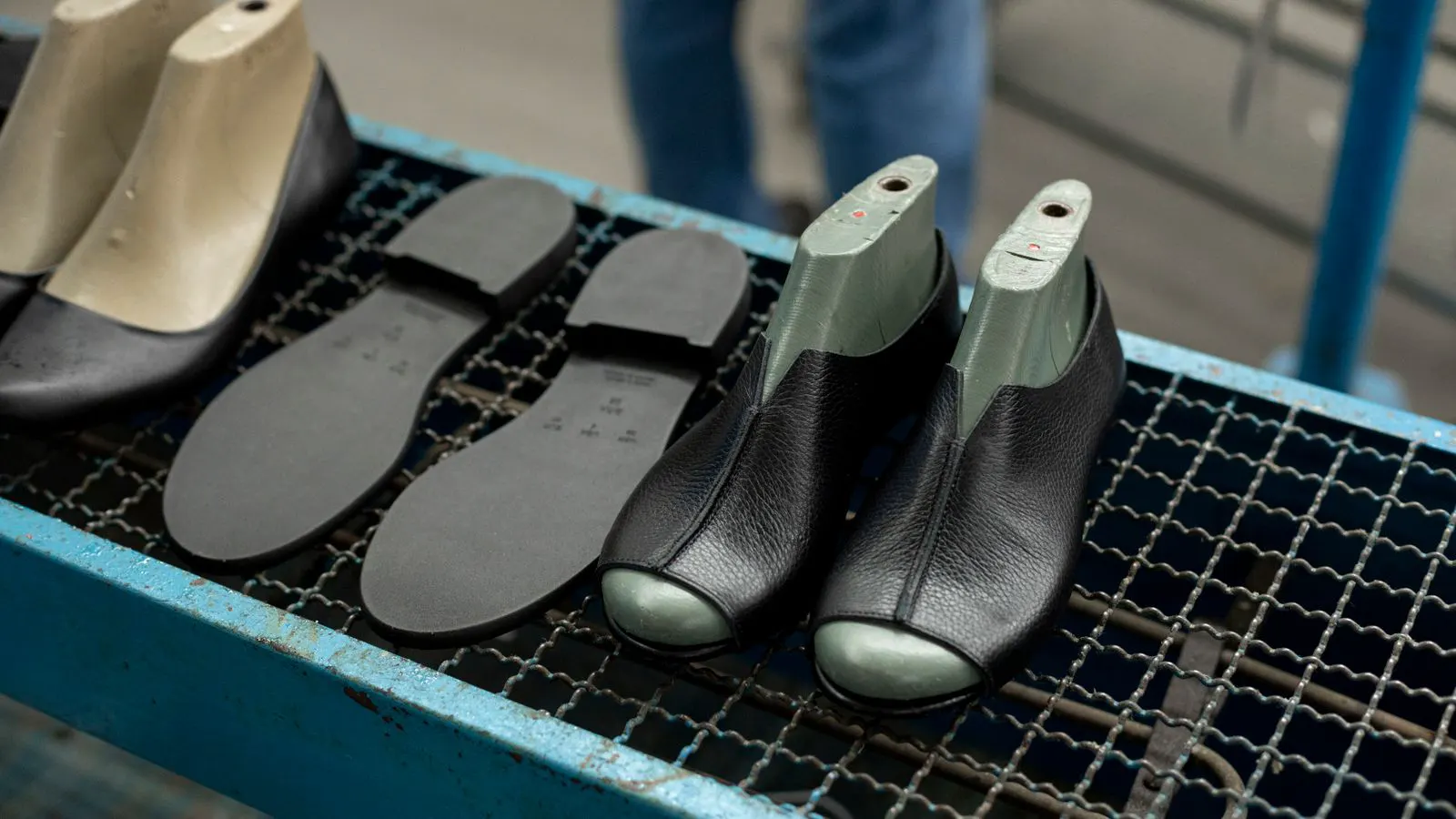
Labor intensity varies by construction method. Goodyear welted boots take longer to make than direct-attached boots. A welted boot involves multiple stitching stages: sewing the upper to the sole, attaching the welt, and stitching the heel. A direct-attached boot uses a single attachment method, often cement or a single row of stitches. Hand-stitched uppers require more skilled labor than machine-stitched uppers. Hand stitching allows for better tension control and a more precise finish, but it takes more time. Machine stitching is faster but can produce a less uniform appearance if the machine is not tuned correctly.
Factory location affects labor cost. Factories in high-cost regions charge more per hour than factories in lower-cost regions. Buyers should ask for a detailed cost breakdown to see how many hours go into each component. A quote that lists a total labor cost without breaking it down by stage is hard to verify. If the supplier claims a labor cost of $15 per pair, you need to know how many minutes of cutting, how many minutes of stitching, and how many minutes of finishing are included in that number.
How supply chain delays affect lead time
Supply chain delays impact lead time at multiple stages. Leather tanning is a slow process. Tanneries control their intake schedules, so delays in tanning delay raw material delivery. Tanneries often run on batch schedules. They process a group of hides at a time. If a new batch is late, the next batch waits. This creates a ripple effect. A delay of one week at the tannery can push back the entire production schedule.
Outsole production depends on rubber and compound availability. If a specific compound is out of stock, the outsole line stops. Outsole compounds are often customized for traction and durability. A standard compound may be available, but a specific slip-resistant compound for wet surfaces may have a longer lead time. Suppliers should be asked about their stock levels for key compounds. If a supplier says they will source the compound when the order is placed, the lead time increases.
Safety components like metal toe caps and shank inserts come from specialized suppliers. These suppliers have longer production cycles than standard leather suppliers. Metal components require stamping, coating, and quality testing. Shank inserts require bending and forming. These processes are not as fast as cutting leather. The supplier must coordinate with multiple specialized vendors. If one vendor is delayed, the assembly line waits.
Logistics delays add time after production. Shipping customs clearance, container availability, and trucking capacity all affect delivery. Even if the boots are ready in the factory, they may sit in a warehouse for days or weeks if a container is not available. Buyers should factor in logistics time when setting the final delivery date.
A typical lead time for leather boot production starts after the sample is approved. The timeline includes material procurement, production, quality inspection, and packaging. Delays in any one stage extend the total time. It is useful to map the lead time by stage. If the tannery takes four weeks, the outsole factory takes two weeks, and the assembly takes three weeks, the total production time is at least nine weeks before logistics.
How to write a clear RFQ for fair comparisons
A clear RFQ reduces quote variance. It tells the supplier exactly what you need and how to price it. A vague RFQ leads to vague quotes. Suppliers will fill in the gaps with their standard practices, which may not match your requirements.
Start with the product specification. Include the leather type, thickness, color, and finish. List the safety features, such as toe cap material and midsole type. Specify the color codes for the leather and the lining. A color name like “brown” is not enough. Use a Pantone code or a specific leather color code from the supplier. If you do not have a code, ask the supplier to send a color swatch for approval before production.
Define the quantity. A minimum order quantity changes the unit price. A larger order may reduce the unit cost but increase the lead time for material procurement. If you order 1,000 pairs, the supplier may order enough leather for 1,000 pairs. If you order 5,000 pairs, the supplier may order a larger batch of leather, which may take longer to tann and process. The unit price may drop, but the lead time may increase.
State the delivery terms. Use Incoterms to define responsibility for shipping and insurance. State the destination port or address. For example, “FOB Shanghai” means the supplier is responsible for costs and risks up to the point the goods are shipped from Shanghai. “DDP Chicago” means the supplier is responsible for all costs and risks until the goods are delivered to the address in Chicago. This distinction affects the quote price.
Include the required documentation. List the certificates, test reports, and packaging requirements. If you need a safety certification, state the standard. If you need specific packaging, describe the box size and labeling. If you need a bill of materials, request it.
Ask for the cost breakdown. Request the price for materials, labor, tooling, and overhead separately. Ask for the lead time by stage, not just the total. A quote that says “total cost: $50” and “total lead time: 10 weeks” is not useful. A quote that says “material: $20, labor: $15, tooling: $5, overhead: $10” and “tanning: 4 weeks, outsole: 2 weeks, assembly: 3 weeks, logistics: 1 week” is useful. You can see where the cost comes from and where the time goes.
A clear RFQ allows suppliers to compare like with like. It reduces the risk of hidden costs appearing later in the order. If a cost is not in the RFQ, it may be added later as a “change order.” This increases the total cost and may delay the delivery.
How to compare quotes fairly
Quotes vary because suppliers price differently. Some include tooling in the first quote, others charge it separately. Some include shipping, others do not. Some include insurance, others do not. You must normalize the quotes before comparing them.
Compare the material cost per pair. If one supplier uses a cheaper leather, the boot may fail the wear test. Do not compare price without comparing quality. Ask for the leather grade and thickness. Ask for the outsole compound. Ask for the safety component specifications. If Supplier A quotes $50 and Supplier B quotes $60, but Supplier B uses a higher grade leather and a steel toe cap while Supplier A uses a composite toe cap and a lower grade leather, the $10 difference may be justified.
Compare the labor cost per pair. If one supplier uses more manual steps, the cost is higher but the finish may be better. Hand stitching costs more but may produce a more durable seam. Machine stitching is faster but may require more rework if the tension is not adjusted. Ask about the stitching method. Ask about the number of stitching passes.
Compare the tooling cost. Tooling is a one-time cost. If you plan to reorder, the tooling cost spreads over multiple orders. If the tooling cost is $5,000 and you order 1,000 pairs, the tooling cost is $5 per pair. If you order 5,000 pairs, the tooling cost is $1 per pair. If you only order 1,000 pairs and do not reorder, the tooling cost is a significant part of the total. Ask if the tooling is included in the first order or charged separately.
Compare the lead time. A cheaper quote with a longer lead time may not be cheaper if you miss a seasonal window. If you need the boots by a specific date, a cheaper quote that takes 12 weeks while a more expensive quote takes 8 weeks may not be an option. Factor in the cost of delay. If you miss a seasonal window, the lost revenue may be higher than the price difference.
Use a standardized comparison sheet. List each cost driver in the same order. This makes it easy to see where the differences come from. A simple spreadsheet with rows for material, labor, tooling, overhead, and logistics makes the comparison clear.
A table of cost drivers and lead time factors
| Cost Driver | Impact on Price | Impact on Lead Time |
|---|---|---|
| Leather grade | Higher grade costs more | Higher grade may have longer supply cycles |
| Safety features | Metal caps and shanks add cost | Safety components have longer production cycles |
| Construction method | Welted boots cost more | Welted boots take longer to stitch |
| Order quantity | Larger orders reduce unit cost | Larger orders require more material and time |
| Tooling | One-time setup cost | Tooling takes weeks to produce |
| Logistics | Shipping and customs add cost | Shipping delays extend delivery |
How to manage production scheduling
Production scheduling requires coordination between multiple departments. The buyer coordinates with the supplier on material availability. The supplier coordinates with the tannery, outsole vendor, and safety component supplier. The supplier also coordinates with internal departments such as production, quality control, and logistics.
Set milestones. Confirm material arrival, sample approval, and production start date. Confirm quality inspection dates and shipping dates. Write these dates down and send them to all parties. A shared calendar or a written confirmation email helps keep everyone on the same page. If a milestone is missed, the schedule slips.
Build buffer time. Do not schedule the final delivery date as the production completion date. Add time for inspection and logistics. If the production takes 10 weeks, do not set the delivery date for 10 weeks. Set it for 12 or 13 weeks. This buffer allows for unexpected delays. If the boots are ready in 10 weeks, they can be shipped early. If there is a delay, the buffer absorbs it.
Communicate changes early. If you change the leather color or quantity, tell the supplier immediately. Changes after production starts delay the schedule. If you change the color after the leather has been cut, the supplier may need to discard the material and order new leather. If you change the quantity, the supplier may need to adjust the production plan. Both actions increase cost and delay.
Track the order. Ask for weekly updates during production. Look for signs of delay, such as missing materials or quality issues. A weekly update that says “production is on track” is good. An update that says “material is delayed by one week” is better because it gives you time to adjust. Do not wait until the end to find out there is a problem.
Common mistakes in leather boot sourcing
Buyers often make mistakes that increase cost or delay delivery. They do not specify the leather thickness, so the supplier uses a standard grade. They do not specify the safety standard, so the supplier uses a lower-spec toe cap. They do not specify the construction method, so the supplier uses the cheapest method available.
They do not request a cost breakdown, so they cannot see where the price comes from. They do not ask for lead time by stage, so they do not know where the delay is. They do not confirm the color code, so the boots arrive in a slightly different shade. They do not order tooling early, so the production start is delayed. They do not buffer for logistics, so the boots arrive late.
These mistakes are easy to fix. They require attention to detail in the RFQ and clear communication during production. A buyer who takes the time to specify every detail and track every milestone is less likely to encounter problems.
How to reduce risk in leather boot production
Reduce risk by working with a supplier who has a stable supply chain. Ask about their backup suppliers for key materials. If the primary tannery is delayed, does the supplier have a backup? If the outsole compound is out of stock, can they source it from another vendor? A supplier with multiple suppliers for each key component is less vulnerable to delays.
Ask about their quality control process. Do they inspect the materials before production? Do they inspect the finished boots before shipping? Do they have a quality control team? A supplier with a strong quality control process is less likely to send defective boots. If they do send defective boots, they are more likely to catch the problem and fix it.
Order a pre-production sample. Check the materials, stitching, and safety features before full production. A sample is a low-cost way to verify the specification. If the sample is wrong, it is cheaper to fix the sample than to fix 1,000 finished boots. The sample should be approved in writing before production starts.
Use a third-party inspection service. An independent inspector checks the boots before shipping. The inspector can verify the quantity, the packaging, and the quality. If the inspector finds issues, the supplier must fix them before shipping. This reduces the risk of receiving defective or incomplete goods.
Negotiate clear penalties for late delivery. A late delivery fee gives the supplier a reason to meet the date. The penalty should be reasonable but significant. It should be enough to motivate the supplier but not so high that it damages the relationship. The penalty should be clearly stated in the contract.
Final check for buyers
Before you place an order, review the specification sheet. Confirm the leather type, safety features, and quantity. Confirm the cost breakdown and lead time. Confirm the delivery terms and documentation requirements.
A clear order reduces errors. It gives the supplier a clear target. It gives you a clear way to measure performance. If the specification is clear, the supplier can do a good job. If the specification is vague, the supplier will have to guess, and the result may not match your expectations.
Frequently asked questions
What is the main cost driver in leather boot production?
Raw material costs, especially the grade of leather and safety components, drive the base price. Labor and overhead also affect the total.
How long does leather boot production take?
Lead time depends on material availability and order size. It includes material procurement, production, quality checks, and shipping.
How do I compare quotes from different suppliers?
Use a standardized comparison sheet. Compare material costs, labor costs, tooling, and lead time by stage, not just the total price.
What is the best way to avoid supply chain delays?
Build buffer time into your schedule. Confirm material availability early and track the order with regular updates.
Do I need to order tooling separately?
Tooling is often a one-time cost. Ask the supplier if it is included in the quote or charged separately. Order it early to avoid delays.