Full-Grain vs Top-Grain Leather for Footwear
Full-grain leather offers superior abrasion resistance and longevity, making it ideal for high-wear safety footwear. Top-grain leather provides a consistent finish at a lower cost. Selecting the right grade depends on the specific durability requirements and budget constraints of the target market.
- Full-grain leather is the most durable option, retaining the natural grain and hide structure.
- Top-grain leather is sanded to remove imperfections, offering a uniform appearance but reduced structural strength.
- Cost efficiency depends on the specific application; full-grain may save money over a long product lifecycle.
- Grain types dictate how leather reacts to chemicals, moisture, and mechanical stress during use.
Why grain structure matters for footwear
Leather is not a single material. It is a composite of dermis, epidermis, and connective tissue that varies significantly based on the animal’s breed, age, and the tanning process. For footwear manufacturers and buyers, understanding these layers is the first step in a proper leather comparison. The difference between a boot that lasts five years and one that fails in twelve months often starts with the grade of leather selected for the upper.
When sourcing for safety footwear, the decision between full-grain and top-grain is rarely just about aesthetics. It is a calculation of mechanical strength against unit cost. The grain layer, the outermost part of the hide, determines how the material handles abrasion, flex, and chemical exposure.
How full-grain and top-grain differ in structure
Full-grain leather is the highest quality grade available. It is tanned with the natural grain and all the layers of the hide intact. The surface texture is unique to each piece, showing the natural pores, scars, and imperfections of the animal. This structure provides the maximum amount of fiber density and strength.
Top-grain leather is created by taking a full-grain hide and sanding or scraping the top layer. This process removes the natural grain and any surface blemishes. The result is a smoother, more uniform surface that takes dye and finishes more evenly. While the underlying structure remains strong, the removal of the outer fibers reduces the overall thickness and mechanical integrity of the material.
There is also a third category, split leather, which is cut from the lower layers of the hide. It is generally used for linings, insoles, or non-structural parts of the shoe because it lacks the tensile strength of the upper layers.
| Option | Best for | Limitations |
|---|---|---|
| Full-Grain Leather | High-wear safety boots, work gloves, heavy-duty soles | Higher initial cost, inconsistent natural appearance |
| Top-Grain Leather | Fashion footwear, mid-range work shoes, dress boots | Lower abrasion resistance than full-grain, uniform finish |
| Split Leather | Linings, insoles, decorative accents | Low tensile strength, poor durability for upper materials |
| Corrected Grain | Uniform appearance for fashion lines | Heavily sanded, reduced natural fiber content |
| Exotic Grains | Premium niche markets, luxury accessories | High cost, specialized tanning requirements |
Durability and abrasion resistance in work boots
The primary driver for choosing full-grain leather in safety footwear is mechanical performance. The natural grain layer acts as a barrier against wear. In a work boot, the toe box and heel are subjected to constant impact and friction. Full-grain leather, with its dense fiber structure, resists this degradation much better than sanded alternatives.
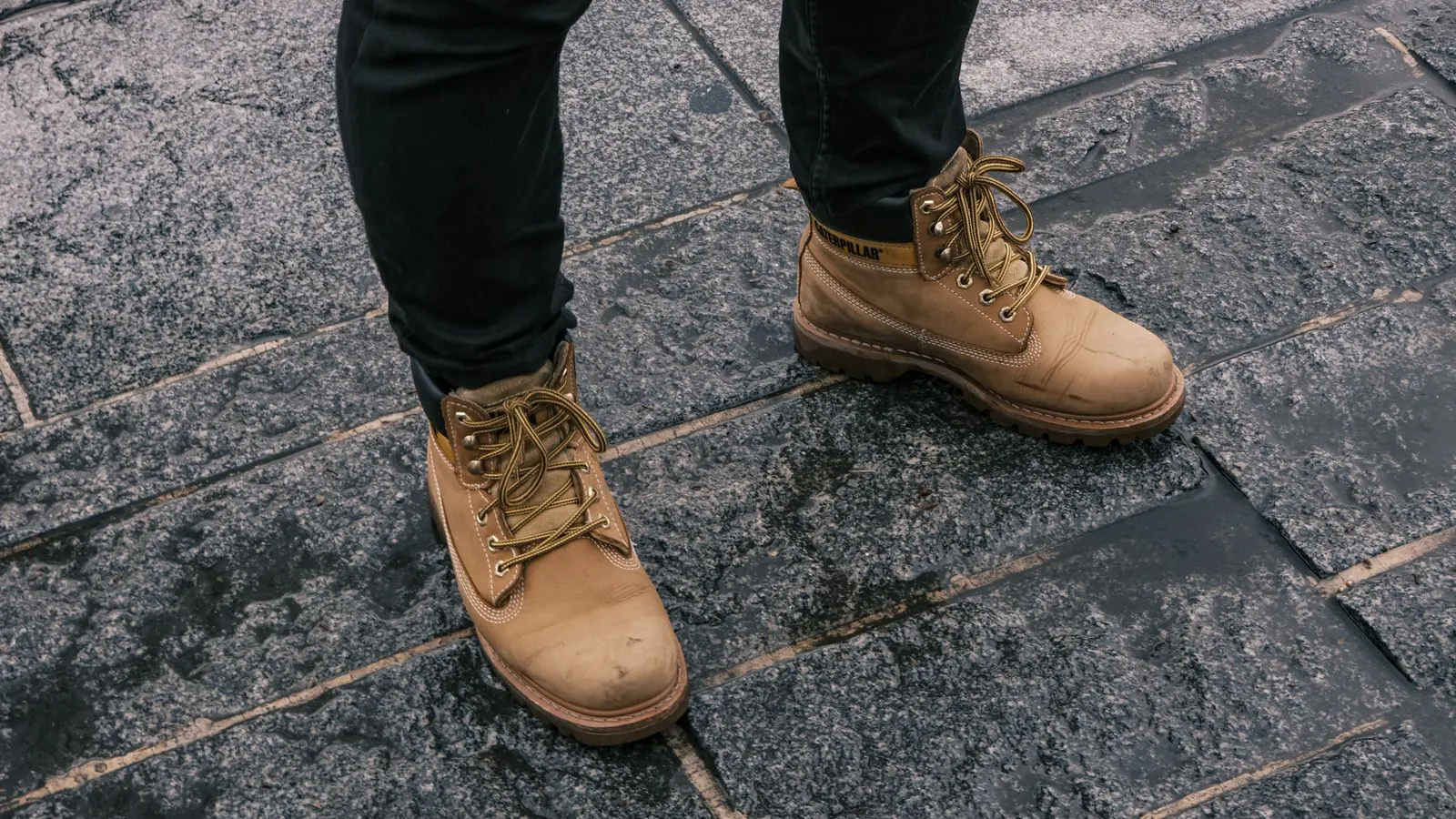
Top-grain leather has a smoother surface, which can actually wear down faster in high-friction zones. The sanded layer is thinner and lacks the protective outer fibers found in full-grain. Over time, this can lead to thinning and eventual failure, especially in the toe area where the user frequently rubs against concrete or tools.
For importers and manufacturers, this difference translates into warranty claims. A pair of boots made with top-grain leather may show visible scuffing and thinning within the first year of heavy use. Full-grain leather, while it may scuff, maintains its structural thickness. The wear pattern is different. Full-grain tends to show surface discoloration rather than structural thinning.
Aesthetic consistency versus natural character
Top-grain leather is often chosen for its visual predictability. Because the surface is sanded and embossed, every piece of leather looks almost identical. This is highly desirable for fashion footwear where a consistent look is a selling point. The material takes dye evenly and holds a polished finish.
Full-grain leather, by contrast, is a natural product. No two pieces are exactly alike. There may be small scars, hair follicles, or variations in color. For high-end work boots or heritage-style footwear, this natural character is a feature, not a flaw. It signals authenticity and quality to the end user.
However, for mass-market safety shoes, consistency is key. Buyers expect a uniform product. If a manufacturer uses full-grain leather, they must source hides that have been carefully selected and matched. This can increase sourcing time and complexity. Top-grain leather simplifies this process, making production lines more predictable and less prone to visual inconsistency.
Cost efficiency and long-term value
The conversation around cost efficiency often focuses on the purchase price per square meter. In this metric, top-grain leather is generally cheaper than full-grain leather. The sanding process reduces the yield slightly, but the primary cost difference comes from the quality of the raw hide used. Full-grain leather requires premium hides that are free from deep cuts or severe scarring.
However, cost efficiency in manufacturing must be viewed through the lens of lifecycle cost. If a safety boot is designed to last three to five years, the initial savings of using top-grain leather may be offset by higher return rates and warranty costs. Full-grain leather, despite its higher upfront cost, often provides better value over time due to its longevity.
For fashion-driven products, the cost of top-grain leather is easier to justify because the product cycle is shorter. The consumer replaces the item more frequently based on style trends rather than wear. For work footwear, the replacement cycle is driven by function. A durable upper extends the service life of the product, reducing the need for frequent repurchase.
Tanning and chemical treatment considerations
The chemical composition of the leather depends on the tanning method. Chrome tanning is the industry standard for footwear because it produces leather that is soft, pliable, and resistant to moisture. Both full-grain and top-grain leathers can be produced using chrome tanning.
The difference lies in how the surface is treated. Top-grain leather often receives a finish layer of pigments and resins to protect the sanded surface. This finish adds a barrier against water and dirt but can crack if the leather flexes too much. Full-grain leather relies more on its natural structure and may receive a lighter finish or just a protective oil.
This difference affects how the leather reacts to industrial cleaning. Top-grain leather with a heavy finish may degrade if exposed to harsh solvents. Full-grain leather is generally more forgiving of chemical exposure, making it a better choice for workers in environments with chemicals or oils.
When to select each grade for your product
The choice between full-grain and top-grain is not a matter of which is “better.” It is a matter of which fits the product specification.
- High-impact safety footwear: Choose full-grain leather. The structural integrity is required to withstand heavy use and extend product life.
- Dress and fashion footwear: Choose top-grain leather. The uniform appearance and smooth finish align with consumer expectations for style.
- Light-duty work shoes: Top-grain may be sufficient if the wear patterns are not severe. It offers a good balance of cost and appearance.
- Heavy industrial applications: Full-grain is the standard. The durability requirement outweighs the cost difference.
- Hybrid designs: Some manufacturers use full-grain for the toe and heel and top-grain for the sides to balance cost and durability. This requires careful engineering of the seam placement.
Common pitfalls in leather sourcing
A frequent mistake in manufacturing is assuming that a leather grade label is a guarantee of performance. A “full-grain” label does not automatically mean the hide is high quality. The animal’s breed, the tanning facility’s chemistry, and the storage conditions all play a role.
Buyers must request physical samples for testing. A visual inspection is not enough. The leather should be subjected to abrasion tests, flex tests, and chemical resistance tests. These tests provide data on how the material will perform in the field.
Another common error is ignoring the hide’s age. Younger animals produce thinner, softer leather that may not be suitable for heavy work boots. Older animals produce thicker, denser leather that holds up better to wear. Understanding the source of the hide is as important as understanding the grade.
Impact on production and lead times
Sourcing full-grain leather can be more complex than sourcing top-grain. Because full-grain hides require higher quality raw material, the supply chain may be less flexible. There can be longer lead times for premium hides, especially if specific colors or textures are required.
Top-grain leather is more widely available and often easier to source on a just-in-time basis. This can help manufacturers manage inventory and reduce storage costs. However, the supply of top-grain leather can also be affected by market fluctuations, so it is wise to maintain relationships with multiple tanneries.
Production lines must be adapted to the specific leather being used. Full-grain leather may require different cutting patterns to account for its natural irregularities. Top-grain leather can be cut more predictably, which can improve material utilization and reduce waste.
Final thoughts on material selection
The leather comparison between full-grain and top-grain is a fundamental decision in footwear manufacturing. It affects cost, durability, appearance, and production efficiency. There is no single correct answer. The right choice depends on the specific requirements of the product and the target market.
Manufacturers must align their material selection with their brand positioning. If the brand promises durability, full-grain leather is the logical choice. If the brand focuses on style and trend, top-grain leather provides the necessary consistency.
By understanding the structural differences and performance characteristics of these grades, buyers can make informed decisions that enhance product quality and customer satisfaction.
Frequently asked questions
What is the main difference between full-grain and top-grain leather?
Full-grain leather retains the natural outer layer of the hide, while top-grain leather has its surface sanded to remove imperfections and create a uniform finish.
Which leather is more durable for work boots?
Full-grain leather is generally more durable for work boots because it retains the full thickness and structural integrity of the hide.
Is top-grain leather a good option for safety footwear?
Top-grain leather can be used for safety footwear, but it may not offer the same long-term durability as full-grain leather in high-wear areas.
How does leather grade affect cost efficiency?
Top-grain leather is usually less expensive upfront, but full-grain leather may offer better cost efficiency over time due to its longer lifespan and lower replacement rate.
Can full-grain and top-grain leather be used in the same shoe?
Yes, some manufacturers combine full-grain leather in high-wear areas like the toe and heel with top-grain leather in other sections to balance cost and performance.