How to Choose Leather for Work Boots
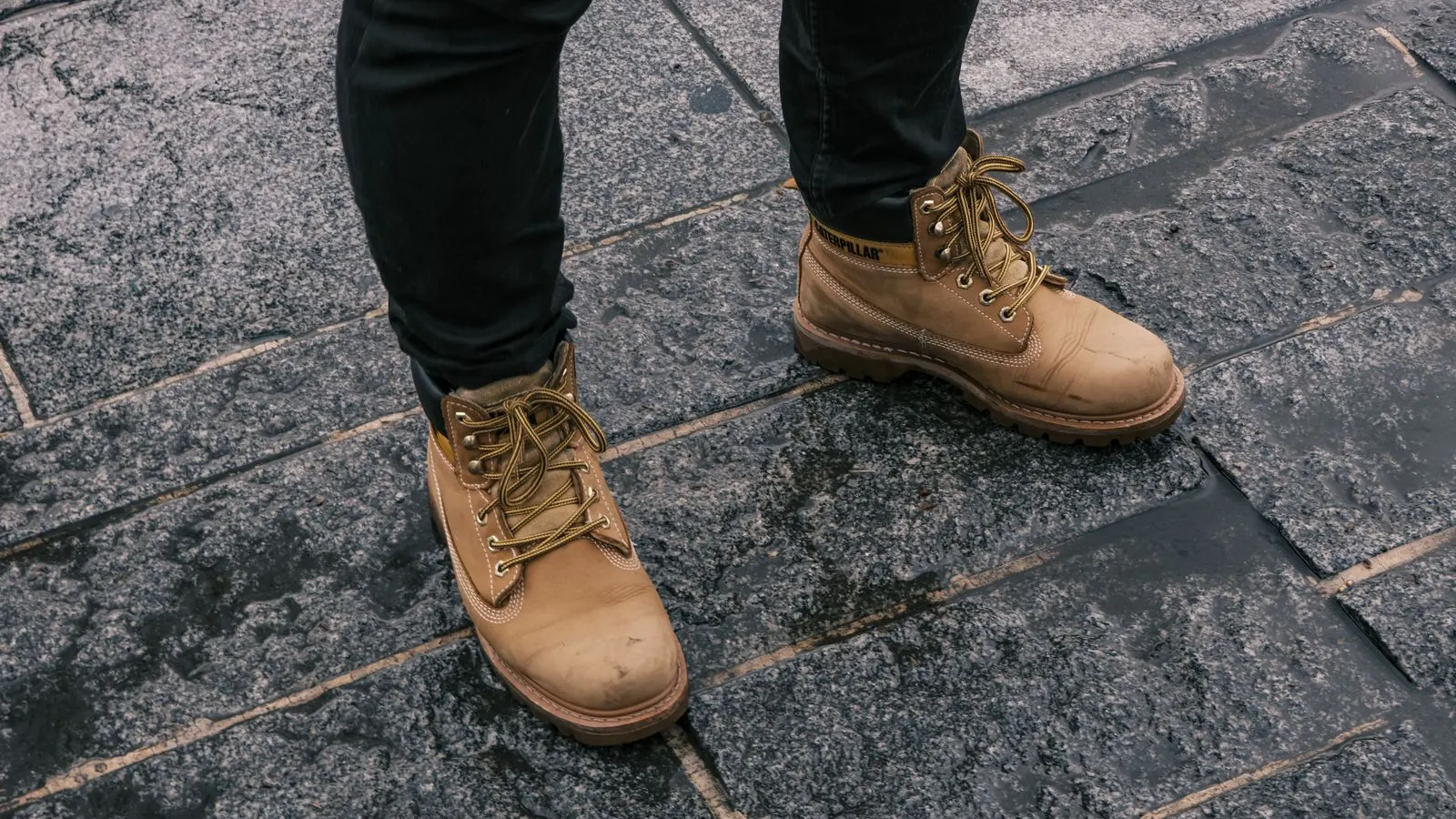
Selecting work boot leather requires matching grain type, thickness, and conditioning to the specific hazard and climate of the job site. This guide breaks down the key durability factors and leather types used in safety footwear manufacturing to support informed sourcing decisions.
- Full-grain leather offers the highest durability for heavy-duty work boots because the outer surface remains intact.
- Split leather reduces weight and cost but lacks the abrasion resistance needed for rough industrial environments.
- Leather thickness, measured in ounces, directly impacts the balance between protection and foot fatigue.
- Tanning and finishing treatments must be evaluated based on the specific chemical and moisture hazards present on the job site.
- Sourcing specifications should explicitly state grain type, weight, and required conditioning to prevent supply inconsistencies.
Choosing the right material for a safety boot starts with the upper. The leather selected determines how the boot resists abrasion, punctures, and moisture. It also affects how the boot fits the user over a full shift.
This guide focuses on work boot leather selection for manufacturers and procurement teams. It covers the main leather types, the physical factors that drive durability, and the practical checks needed when reviewing a supplier sample.
What is work boot leather made of
Work boot leather is typically sourced from animal hides, most commonly from cattle, sheep, or goats. The hide is processed through a tanning process to make it stable and pliable. The tanning method changes how the leather behaves in the final product.
Chrome tanning is the most common method for safety footwear. It produces leather that is flexible, water-resistant, and relatively easy to work with. It also allows for many colors and finishes. Vegetable tanning uses plant-based tannins. It creates a stiffer leather that ages differently and often develops a distinct patina.
The part of the hide determines the quality and appearance of the finished boot. The top layer of the hide is the grain. The layer beneath is the flesh side. The bottom layer is the backing. How these layers are used defines the type of leather in the boot.
How leather grain types affect boot performance
The grain is the most visible part of the upper. It is also where most of the wear occurs. There are three main grain structures used in work boot production.
Full-grain leather comes from the top layer of the hide. The natural surface texture is left intact. Scars and imperfections are usually not removed. This type of leather is the strongest and most durable. It is preferred for heavy industrial applications where the boot will face constant scraping and impact.
Top-grain leather uses the top layer of the hide but removes the natural surface texture. The surface is sanded and finished to create a smooth, uniform look. It is slightly less durable than full-grain leather but costs less to produce. It is common in mid-range work boots that need a professional appearance without the highest level of abrasion resistance.
Split leather is made from the lower layers of the hide. It is lighter and more pliable than full-grain leather. It is often used for lining or for the collar area of the boot. It is generally not suitable for the main outsole contact areas because it wears down quickly.
The choice of grain should match the risk profile of the work. A steel-toed boot for a construction site usually needs full-grain leather. A boot for a warehouse environment with less rough handling may perform well with top-grain leather.
Durability factors that drive material selection
Leather is not a single material. Its performance depends on several physical properties. These properties must be tested or specified before a production run begins.
Thickness and weight
Leather thickness is measured in ounces, where one ounce equals one ounce of leather per square foot. Thicker leather is more resistant to punctures and abrasion. It is also stiffer. A boot made with very thick leather may require a longer break-in period. It can also cause foot fatigue if the user walks for many hours. A common range for work boots is between eight and twelve ounces for the main upper panels.
Abrasion resistance
Abrasion resistance is the ability of the leather to withstand rubbing against hard surfaces. This is a primary concern for boots used on rough terrain or in environments with gravel and debris. Full-grain leather with a tight grain structure performs best in this area.
Water resistance and breathability
Water resistance prevents liquid from passing through the leather. Breathability allows moisture from the foot to escape. These two properties often conflict. A fully waterproof leather may trap heat and sweat, leading to discomfort. Manufacturers often use a combination of treated leather and a membrane to manage moisture. The specific treatment is chosen based on the climate and the type of wet work the user performs.
Chemical resistance
If the boot will be used in a chemical processing environment, the leather must be treated to resist specific substances. Standard leather is not naturally resistant to oils, solvents, or acids. A chemical-resistant finish or a specific leather type must be specified in the sourcing documents.
How to read a leather specification
When reviewing a quote or a sample, the specification sheet is the most important document. It should list the exact material properties.
| Parameter | Typical Value or Description | Why It Matters |
|---|---|---|
| Grain Type | Full-grain, Top-grain, Split | Determines abrasion resistance and appearance |
| Weight | 8 oz to 12 oz | Balances protection against fatigue |
| Tanning | Chrome or Vegetable | Affects flexibility, color, and aging |
| Finish | Aniline, Semi-aniline, Pigmented | Controls water resistance and look |
| Thickness | 1.5 mm to 3.0 mm | Impacts puncture resistance |
The specification should also state the country of origin and the supplier details. Leather quality can vary significantly between regions due to differences in feed and processing standards. A written specification prevents ambiguity during inspection.
A practical example of material selection
Consider a manufacturer sourcing upper leather for a pair of safety boots intended for a heavy-duty manufacturing plant. The work involves frequent movement across concrete floors with scattered metal shavings. The environment is dry but the user wears the boots for ten hours a day.
The buyer reviews three options. Option one is a thin, split leather lining. It is soft but will wear through within weeks on a concrete floor. Option two is a top-grain leather with a light weight of eight ounces. It offers a smooth finish but may scratch easily on the metal shavings. Option three is a full-grain leather with a weight of eleven ounces and a chrome-tanned finish.
The full-grain option is selected. It provides the necessary abrasion resistance for the metal shavings. The weight is acceptable for the required protection level. The finish is selected to allow some breathability without making the leather too stiff. This decision is based on the specific job site conditions rather than a general preference for a certain look.
Common sourcing mistakes to avoid
Many sourcing issues stem from vague material descriptions. Saying “high quality leather” is not a specification. It does not tell the factory what to buy.
One common mistake is ignoring the lining material. The lining affects comfort but also affects the overall durability of the boot if it is exposed to moisture. A cheap lining that peels off can create a point of failure inside the boot.
Another mistake is not testing for color fastness. If the leather fades or rubs off onto the user’s clothing, it creates a quality complaint. The specification should require a color fastness test before the production run starts.
Finally, buyers should not assume that thicker is always better. A boot that is too stiff can cause injury if the user cannot flex their foot properly. The weight must be matched to the task.
Final checks before placing an order
Before releasing a purchase order, the production team should review the sample against the specification. Check the grain type, the weight, and the finish. The sample should be handled and bent to check for stiffness. It should be exposed to water to check for resistance.
Keep a sample from the approved batch. This allows for future comparison if a new batch of leather is received. Consistency is difficult to maintain across different hides. A reference sample is a basic tool for quality control.
The leather selected for a work boot is the first line of defense. It must be chosen with the specific hazards of the job in mind. By understanding the grain types and durability factors, buyers can make informed decisions that result in a safe and durable product.
Frequently asked questions
What is the difference between full-grain and top-grain leather?
Full-grain leather uses the entire top layer of the hide with the natural texture intact. Top-grain leather is sanded and finished to remove the natural texture, making it smoother but slightly less durable.
How is leather weight measured in work boots?
Leather weight is measured in ounces per square foot. A higher ounce weight indicates thicker leather, which generally provides more protection but may be stiffer.
Does thicker leather always make a better boot?
No. While thicker leather offers more resistance to punctures and abrasion, it can also be stiffer and cause foot fatigue. The weight must be balanced against the specific needs of the work.
What tanning method is most common for safety footwear?
Chrome tanning is the most common method used in safety footwear manufacturing. It produces flexible, water-resistant leather that is easy to color and finish.
Why is a reference sample needed when sourcing leather?
Leather varies from batch to batch due to differences in the animal and processing. A reference sample allows the factory to match the approved quality and appearance for future production runs.